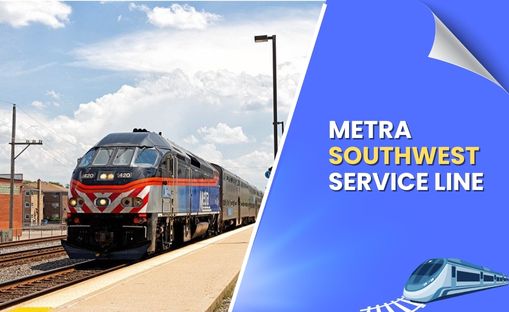
Metra Lines form the backbone of commuter rail transportation across Chicago and the surrounding suburbs. The Metra system connects downtown Chicago with communities throughout the six-county metropolitan area, making it an important transportation option for daily commuters, students, visitors, workers, and occasional travelers.
Metra currently operates 11 commuter rail routes with nearly 500 route miles and 243 stations across the Chicago region. The lines radiate from several downtown Chicago terminals and extend into communities throughout northeastern Illinois.
Each Metra line serves a different geographic corridor. Some travel north toward Kenosha and Fox Lake, others run west toward Elburn and Aurora, while others connect Chicago with Joliet, Manhattan, University Park, and Antioch.
This complete guide explains the Metra train lines, routes, destinations, major stations, downtown terminals, schedules, tickets, fares, transfers, service alerts, and trip-planning information in one place.
Metra Lines at a Glance
Here is a quick overview of all 11 Metra routes:
| Metra Line | Common Abbreviation | Main Destination | Downtown Chicago Terminal |
|---|---|---|---|
| BNSF Railway Line | BNSF | Aurora | Chicago Union Station |
| Heritage Corridor | HC | Joliet | Chicago Union Station |
| Metra Electric District | ME | University Park | Millennium Station |
| Milwaukee District North | MD-N | Fox Lake | Chicago Union Station |
| Milwaukee District West | MD-W | Elgin | Chicago Union Station |
| North Central Service | NCS | Antioch | Chicago Union Station |
| Rock Island District | RI | Joliet | LaSalle Street Station |
| SouthWest Service | SWS | Manhattan | Chicago Union Station |
| Union Pacific North | UP-N | Kenosha | Ogilvie Transportation Center |
| Union Pacific Northwest | UP-NW | Harvard | Ogilvie Transportation Center |
| Union Pacific West | UP-W | Elburn | Ogilvie Transportation Center |
Metra’s current system information identifies these 11 routes, while Metra’s official materials use abbreviations such as BNSF, HC, ME, MD-N, MD-W, NCS, RI, SWS, UP-N, UP-NW, and UP-W.
What Are Metra Lines?
Metra lines are commuter rail routes that connect Chicago with communities throughout northeastern Illinois.
Unlike a city subway system where several lines may share downtown tracks, Metra’s routes generally operate along separate railroad corridors. Each line has its own:
- Route
- Stations
- Timetable
- Service pattern
- Downtown terminal
- Fare structure based on the trip
- Parking locations
- Connecting transportation options
- Service alerts and construction notices
The system is designed primarily for regional travel between Chicago and its suburbs, although passengers can also use Metra for leisure trips, appointments, events, shopping, and other purposes.
Metra describes its rail system as serving the six-county Chicago area and providing service through more than 240 stations.
How Many Metra Lines Are There?
There are 11 Metra commuter rail lines:
- BNSF Railway Line
- Heritage Corridor
- Metra Electric District
- Milwaukee District North
- Milwaukee District West
- North Central Service
- Rock Island District
- SouthWest Service
- Union Pacific North
- Union Pacific Northwest
- Union Pacific West
There are also several branches associated with individual routes, including the Beverly Branch of the Rock Island District, the McHenry Branch of the Union Pacific Northwest, and branches of the Metra Electric District. Metra’s documentation identifies these branch services separately from the 11 main lines.
Complete List of Metra Lines
1. BNSF Railway Line
The BNSF Railway Line runs between Chicago Union Station and Aurora.
It serves many communities in Chicago’s western suburbs and is one of Metra’s major commuter corridors.
BNSF Line Key Information
| Information | Details |
|---|---|
| Line | BNSF Railway |
| Abbreviation | BNSF |
| Chicago Terminal | Chicago Union Station |
| Western Terminal | Aurora |
| General Direction | West |
| Service Area | Western suburbs |
Some major communities and stations along the BNSF corridor include:
- Cicero
- Berwyn
- Brookfield
- LaGrange
- Western Springs
- Hinsdale
- Downers Grove
- Lisle
- Naperville
- Route 59
- Aurora
Metra’s current line materials identify Aurora as the western destination for the BNSF route.
Who Uses the BNSF Line?
The route is useful for passengers traveling between downtown Chicago and western suburban communities such as Naperville, Downers Grove, Lisle, and Aurora.
2. Heritage Corridor
The Heritage Corridor connects Chicago Union Station with Joliet.
It follows a historically important railroad corridor through the southwest portion of the Chicago metropolitan area.
Heritage Corridor Overview
| Information | Details |
|---|---|
| Line | Heritage Corridor |
| Abbreviation | HC |
| Chicago Terminal | Chicago Union Station |
| Destination | Joliet |
| General Direction | Southwest |
| Service Type | Commuter rail |
The Heritage Corridor is different from the Rock Island District even though both provide service between Chicago and Joliet.
The two routes use different railroad corridors and have different station patterns and schedules.
Metra operates Heritage Corridor service over infrastructure owned by Canadian National under a trackage-rights arrangement.
Heritage Corridor Travel
Passengers considering this line should pay particular attention to the current timetable because Heritage Corridor service patterns differ from many other Metra routes.
3. Metra Electric District
The Metra Electric District, often shortened to Metra Electric or ME, runs south from downtown Chicago toward University Park.
It is one of the most distinctive Metra routes because it uses electric-powered commuter rail service rather than diesel-powered service.
Metra Electric Overview
| Information | Details |
|---|---|
| Line | Metra Electric District |
| Abbreviation | ME |
| Downtown Terminal | Millennium Station |
| Main Destination | University Park |
| General Direction | South |
| Power | Electric |
Metra’s system information identifies Metra Electric as its electric-powered line.
The route also includes branches serving areas such as:
- Blue Island
- South Chicago
Why Metra Electric Is Important
Metra Electric provides rail service to communities south of downtown Chicago and offers access to major destinations, educational institutions, residential neighborhoods, and employment centers.
Passengers should select the correct branch and destination when checking schedules because the Metra Electric District includes multiple service patterns.
4. Milwaukee District North
The Milwaukee District North Line, abbreviated MD-N, connects Chicago Union Station with Fox Lake.
It generally travels north and northwest through Chicago and the northern suburbs.
Milwaukee District North Overview
| Information | Details |
|---|---|
| Line | Milwaukee District North |
| Abbreviation | MD-N |
| Chicago Terminal | Chicago Union Station |
| Northern Destination | Fox Lake |
| General Direction | North/Northwest |
Major communities served by the corridor include:
- Glenview
- Northbrook
- Deerfield
- Lake Forest
- Libertyville
- Grayslake
- Fox Lake
Metra’s current line listing identifies Fox Lake as the destination for Milwaukee District North.
Who Should Consider MD-N?
This route is particularly useful for travelers between downtown Chicago and northern suburban communities along the Fox Lake corridor.
5. Milwaukee District West
The Milwaukee District West Line, or MD-W, runs from Chicago Union Station toward Elgin.
It provides commuter rail service to communities west and northwest of Chicago.
Milwaukee District West Overview
| Information | Details |
|---|---|
| Line | Milwaukee District West |
| Abbreviation | MD-W |
| Chicago Terminal | Chicago Union Station |
| Destination | Elgin |
| General Direction | West/Northwest |
Communities served along the corridor include areas around:
- Franklin Park
- Bensenville
- Elmwood Park
- Itasca
- Wood Dale
- Roselle
- Hanover Park
- Schaumburg
- Elgin
The current Metra line listing identifies Elgin as the destination of the Milwaukee District West route.
6. North Central Service
The North Central Service, commonly abbreviated NCS, connects Chicago Union Station with Antioch.
It serves communities in northern Cook County and Lake County.
North Central Service Overview
| Information | Details |
|---|---|
| Line | North Central Service |
| Abbreviation | NCS |
| Chicago Terminal | Chicago Union Station |
| Northern Destination | Antioch |
| General Direction | North/Northwest |
The North Central Service was introduced as a new Chicago-area commuter rail route in 1996 and later received infrastructure improvements that allowed additional service.
Stations along the corridor include communities such as:
- River Grove
- Franklin Park
- Rosemont
- Des Plaines
- Mount Prospect
- Prospect Heights
- Buffalo Grove
- Wheeling
- Mundelein
- Vernon Hills
- Libertyville area
- Antioch
North Central Service Travel Tip
Always check the current timetable before planning a trip because the NCS service pattern can differ from the more frequent corridors in the Metra system.
7. Rock Island District
The Rock Island District, commonly called the Rock Island Line, runs from LaSalle Street Station to Joliet.
It travels southwest from downtown Chicago and serves communities in the southern part of the metropolitan area.
Rock Island Overview
| Information | Details |
|---|---|
| Line | Rock Island District |
| Abbreviation | RI |
| Downtown Terminal | LaSalle Street Station |
| Destination | Joliet |
| General Direction | Southwest |
Important communities along the Rock Island corridor include:
- Blue Island
- Robbins
- Midlothian
- Oak Forest
- Tinley Park
- Mokena
- New Lenox
- Joliet
The route also includes the Beverly Branch, which serves several South Side Chicago neighborhoods. Metra’s current district documentation identifies the Beverly Branch as part of the Rock Island District.
Rock Island vs. Heritage Corridor
Both lines reach Joliet, but they are not the same route.
| Feature | Rock Island | Heritage Corridor |
|---|---|---|
| Chicago Terminal | LaSalle Street | Chicago Union Station |
| Destination | Joliet | Joliet |
| General Direction | Southwest | Southwest |
| Route | Rock Island corridor | Heritage Corridor |
| Branch | Beverly Branch | No equivalent Rock Island branch |
This distinction is important when searching for a train to or from Joliet.
8. SouthWest Service
The SouthWest Service, abbreviated SWS, connects Chicago Union Station with Manhattan, Illinois.
It travels through Chicago’s southwest side and suburban communities.
SouthWest Service Overview
| Information | Details |
|---|---|
| Line | SouthWest Service |
| Abbreviation | SWS |
| Chicago Terminal | Chicago Union Station |
| Destination | Manhattan |
| General Direction | Southwest |
The line serves communities including areas around:
- Chicago Ridge
- Palos Heights
- Palos Park
- Orland Park
- Tinley Park
- Manhattan
Metra’s current line listing identifies Manhattan as the SouthWest Service destination.
Important Planning Point
Do not confuse SouthWest Service with the Rock Island District. Both serve Chicago’s southwest suburbs, but they are separate Metra routes with different stations and schedules.
9. Union Pacific North Line
The Union Pacific North Line, or UP-N, runs north from Ogilvie Transportation Center toward Kenosha, Wisconsin.
This is the Metra route that extends beyond Illinois into Wisconsin.
UP North Overview
| Information | Details |
|---|---|
| Line | Union Pacific North |
| Abbreviation | UP-N |
| Downtown Terminal | Ogilvie Transportation Center |
| Northern Destination | Kenosha |
| General Direction | North |
Important communities served include:
- Ravenswood
- Evanston
- Wilmette
- Winnetka
- Glencoe
- Highland Park
- Lake Forest
- Waukegan
- Zion
- Winthrop Harbor
- Kenosha
Metra’s current line listing identifies Kenosha as the northern destination.
UP North Travel
This line is especially useful for passengers traveling between downtown Chicago and communities along the North Shore and farther north toward the Illinois-Wisconsin border.
10. Union Pacific Northwest Line
The Union Pacific Northwest Line, abbreviated UP-NW, runs from Ogilvie Transportation Center toward Harvard.
It also has a branch serving McHenry.
UP Northwest Overview
| Information | Details |
|---|---|
| Line | Union Pacific Northwest |
| Abbreviation | UP-NW |
| Downtown Terminal | Ogilvie Transportation Center |
| Main Destination | Harvard |
| Branch | McHenry |
| General Direction | Northwest |
Major communities include:
- Park Ridge
- Des Plaines
- Mount Prospect
- Arlington Heights
- Palatine
- Barrington
- Cary
- Crystal Lake
- Woodstock
- Harvard
The McHenry Branch provides additional service within the UP Northwest system. Metra’s official district codes identify the main UP-NW line separately from its branch service.
Metra’s current line listing identifies Harvard as the main destination.
11. Union Pacific West Line
The Union Pacific West Line, or UP-W, runs west from Ogilvie Transportation Center to Elburn.
It serves many communities in Chicago’s western suburbs.
UP West Overview
| Information | Details |
|---|---|
| Line | Union Pacific West |
| Abbreviation | UP-W |
| Downtown Terminal | Ogilvie Transportation Center |
| Destination | Elburn |
| General Direction | West |
Major communities include:
- Oak Park
- Elmhurst
- Villa Park
- Lombard
- Glen Ellyn
- Wheaton
- Winfield
- West Chicago
- Geneva
- Elburn
Metra’s current line information identifies Elburn as the western destination for UP West.
Metra Lines by Direction
If you do not know the name of your Metra line, thinking about the direction you need to travel can make the system easier to understand.
| Travel Direction | Metra Lines |
|---|---|
| North | Union Pacific North |
| Northwest | Union Pacific Northwest, Milwaukee District North, North Central Service |
| West | Union Pacific West, BNSF Railway, Milwaukee District West |
| Southwest | Rock Island District, Heritage Corridor, SouthWest Service |
| South | Metra Electric District |
This is a general geographic guide. Your exact station may be served by only one particular route, so always verify the station in the current Metra schedule.
Metra Downtown Train Stations
One of the easiest ways to identify a Metra line is to know its downtown Chicago terminal.
Chicago Union Station
Chicago Union Station is the downtown terminal for:
- BNSF Railway
- Heritage Corridor
- Milwaukee District North
- Milwaukee District West
- North Central Service
- SouthWest Service
Ogilvie Transportation Center
Ogilvie Transportation Center is the downtown terminal for:
- Union Pacific North
- Union Pacific Northwest
- Union Pacific West
LaSalle Street Station
LaSalle Street Station serves:
- Rock Island District
Millennium Station
Millennium Station serves:
- Metra Electric District
Understanding these four downtown terminals makes it much easier to navigate the Metra system.
Metra Lines and Train Destinations
Here is another quick way to find the correct line based on your destination.
| Destination | Metra Line |
|---|---|
| Aurora | BNSF |
| Joliet | Heritage Corridor or Rock Island |
| University Park | Metra Electric |
| Fox Lake | Milwaukee District North |
| Elgin | Milwaukee District West |
| Antioch | North Central Service |
| Manhattan | SouthWest Service |
| Kenosha | Union Pacific North |
| Harvard | Union Pacific Northwest |
| Elburn | Union Pacific West |
Destination information is based on Metra’s current system and line listings.
Which Metra Line Goes to Joliet?
Two Metra routes serve Joliet:
Rock Island District
The Rock Island District operates between LaSalle Street Station and Joliet.
Heritage Corridor
The Heritage Corridor operates between Chicago Union Station and Joliet.
Because the routes use different downtown terminals and station patterns, passengers should confirm the line before purchasing a ticket or planning a transfer.
Which Metra Line Goes to Aurora?
The BNSF Railway Line serves Aurora.
For passengers traveling between Chicago and Aurora, the BNSF route is the relevant Metra corridor.
Which Metra Line Goes to Kenosha?
The Union Pacific North Line serves Kenosha.
It is the Metra route that continues north into Wisconsin. Metra’s current line listing identifies Kenosha as the destination for UP North.
Which Metra Line Goes to Harvard?
The Union Pacific Northwest Line serves Harvard.
Passengers should distinguish Harvard service from the McHenry Branch because the UP Northwest system includes both the main route and branch service.
Which Metra Line Goes to Elburn?
The Union Pacific West Line serves Elburn.
The line travels west from Ogilvie Transportation Center through communities including Oak Park, Elmhurst, Lombard, Wheaton, Geneva, and other western suburbs.
Which Metra Line Goes to University Park?
The Metra Electric District serves University Park.
It is also the only Metra line that uses electric-powered service, making it distinct from the diesel-powered lines.
Metra Lines and Stations
Metra stations are distributed throughout Chicago and the surrounding suburbs.
The current Metra system includes 243 stations, according to Metra’s system information.
A station may provide:
- Train boarding
- Parking
- Ticket purchasing
- Bike access
- Bus connections
- Accessible facilities
- Passenger information
- Real-time train information
However, station facilities vary. Travelers should check the specific station page rather than assuming that every station offers the same services.
Metra Lines and Schedules
Each Metra route has its own schedule.
When searching for a train, passengers should check:
- The Metra line.
- Departure station.
- Destination station.
- Travel date.
- Desired departure time.
- Whether the train is weekday, weekend, or holiday service.
- Any current service alerts.
This is important because train frequency and stopping patterns vary between routes.
A schedule from one Metra line should not be used to estimate the timetable for another line.
Metra Train Schedule by Line
| Line | Main Destination | Chicago Terminal |
|---|---|---|
| BNSF | Aurora | Union Station |
| Heritage Corridor | Joliet | Union Station |
| Metra Electric | University Park | Millennium Station |
| Milwaukee North | Fox Lake | Union Station |
| Milwaukee West | Elgin | Union Station |
| North Central Service | Antioch | Union Station |
| Rock Island | Joliet | LaSalle Street |
| SouthWest Service | Manhattan | Union Station |
| UP North | Kenosha | Ogilvie |
| UP Northwest | Harvard | Ogilvie |
| UP West | Elburn | Ogilvie |
For an actual trip, use the current Metra schedule rather than relying only on this overview.
Metra Lines and Fares
Metra fares depend on the trip and ticket product.
Common Metra ticket options include:
- One-Way Tickets
- Day Passes
- Monthly Passes
- Weekend Passes
- Reduced-fare tickets for eligible passengers
- Other qualifying fare products
Your fare is determined by the applicable fare structure for the origin and destination.
Important Fare Tip
Do not assume that every Metra line has the same point-to-point price. The fare depends on the zones and stations involved in your journey.
Before traveling, check the current fare information for your exact trip.
Metra Tickets for Different Lines
Passengers can generally plan their trip by selecting the correct line and stations before purchasing a ticket.
Depending on the route, station, and ticket type, Metra passengers may use mobile ticketing and other available ticket-purchasing options.
A good approach is:
Choose Line → Select Origin → Select Destination → Check Fare → Purchase Ticket → Check Train Status
This simple process can reduce mistakes, particularly when multiple Metra lines serve nearby areas.
Metra Lines and Ventra
The Ventra system is an important part of public transportation in the Chicago region and supports Metra mobile ticketing.
Passengers using mobile tickets should make sure the correct ticket has been purchased and activated according to the applicable instructions before presenting it for inspection.
When traveling, keep your phone charged and your ticket accessible.
Metra Lines and Service Alerts
A Metra schedule tells you when a train is normally expected to operate. A service alert tells you about temporary changes or disruptions that may affect your trip.
Service alerts can involve:
- Delays
- Construction
- Track work
- Schedule changes
- Station changes
- Temporary closures
- Modified service
- Special event operations
- Weather-related impacts
Checking alerts before traveling is particularly important when your journey involves a transfer or a long-distance trip.
Metra Tracker for Real-Time Train Information
Metra provides Metra Tracker for real-time train information.
The tracker can help passengers determine:
- Where a train is
- When the next train is expected
- Whether a train is approaching
- Current train movement
- Station departure information
Metra describes its tracker as providing real-time information and an interactive map showing train movement.
For day-of-travel information, real-time tracking is more useful than relying solely on a static timetable.
Metra Lines and Weekend Travel
Weekend travel can be different from weekday commuting.
Before taking a Metra train on Saturday, Sunday, or a holiday, check:
- Whether your line operates that day
- The current departure time
- Weekend or holiday ticket rules
- Any construction notices
- Service alerts
- Connections at your destination
This is especially important for lines with different weekday and weekend service patterns.
Metra Lines for Daily Commuters
Metra is heavily used for regular commuting between suburban communities and downtown Chicago.
Daily riders often choose a line based on:
- Home location
- Workplace location
- Station parking
- Train frequency
- Travel time
- Downtown terminal
- Connection options
- Ticket cost
- First and last train times
A commuter should compare the complete journey rather than looking only at the train ride itself.
For example:
Home → Station → Parking → Train → Downtown Terminal → CTA/Pace/Walking → Workplace
The best route for one passenger may not be the same as another because their origin and final destination are different.
Metra Lines for Visitors to Chicago
Visitors can also use Metra to reach suburban destinations outside the CTA rail network.
Metra can be useful for trips involving:
- Suburban attractions
- Shopping areas
- Colleges and universities
- Sporting events
- Family visits
- Business meetings
- Residential communities
- Regional rail connections
Visitors should identify their destination first and then determine which Metra line serves the nearest station.
Metra Lines and Connections
Metra is part of the broader Chicago-area transportation network.
Depending on the station, passengers may connect with:
- CTA trains
- CTA buses
- Pace buses
- Metra trains on another line
- Amtrak
- South Shore Line
- Local transportation services
Connection availability differs by station.
Downtown Connections
The major downtown terminals provide access to Chicago’s broader transit network, although the exact transfer depends on the terminal and destination.
Always allow additional time when transferring between transportation systems.
Metra Line Abbreviations
If you are looking at a timetable, map, station sign, or service alert, you may see abbreviations instead of full line names.
| Abbreviation | Full Name |
|---|---|
| BNSF | BNSF Railway |
| HC | Heritage Corridor |
| ME | Metra Electric District |
| MD-N | Milwaukee District North |
| MD-W | Milwaukee District West |
| NCS | North Central Service |
| RI | Rock Island District |
| SWS | SouthWest Service |
| UP-N | Union Pacific North |
| UP-NW | Union Pacific Northwest |
| UP-W | Union Pacific West |
Metra’s official CADD documentation confirms these district abbreviations.
Who Operates the Metra Lines?
Although passengers generally experience the system as one Metra network, the ownership and operating arrangements differ between routes.
Metra’s current system documentation explains that:
- Metra directly owns and operates the Rock Island, Metra Electric, Milwaukee District North, and Milwaukee District West lines.
- BNSF Railway operates the BNSF service under a purchase-of-service agreement.
- Union Pacific operates the UP North, UP Northwest, and UP West lines.
- Metra operates Heritage Corridor, North Central Service, and SouthWest Service through agreements involving freight railroad infrastructure.
This arrangement is one reason Metra’s rail system is operationally complex.
For passengers, however, the important point is that these routes are all part of the Metra commuter rail network.
Metra Lines and Railroad Ownership
The railroad infrastructure underlying a Metra route is not necessarily owned by Metra.
For example:
| Line Group | Operating Arrangement |
|---|---|
| Rock Island | Metra-owned/operated |
| Metra Electric | Metra-owned/operated |
| Milwaukee District North | Metra-owned/operated |
| Milwaukee District West | Metra-owned/operated |
| BNSF | BNSF-operated under agreement |
| UP North | Union Pacific-operated |
| UP Northwest | Union Pacific-operated |
| UP West | Union Pacific-operated |
| Heritage Corridor | Metra-operated over freight railroad infrastructure |
| North Central Service | Metra-operated under agreement |
| SouthWest Service | Metra-operated under agreement |
Metra’s asset-management documentation provides the detailed ownership and operating relationships for all 11 lines.
How to Choose the Right Metra Line
If you are unfamiliar with the system, use this five-step method.
Step 1: Find Your Destination
Start with the city or station you need to reach.
Step 2: Identify the Station
Find the Metra station closest to your destination.
Step 3: Determine the Line
Check which Metra route serves that station.
Step 4: Find the Downtown Terminal
If traveling from downtown Chicago, identify whether you need:
- Union Station
- Ogilvie Transportation Center
- LaSalle Street Station
- Millennium Station
Step 5: Check the Current Schedule
Finally, confirm the train time, stopping pattern, fare, and service alerts.
This approach is much safer than choosing a Metra line based only on the destination city.
Metra Lines vs. CTA Lines
Metra and the Chicago Transit Authority serve different types of travel.
Metra
Generally focuses on regional commuter rail connecting Chicago with suburban communities.
CTA
Provides urban rapid-transit rail and bus service throughout Chicago and nearby areas.
A passenger may use both systems during one journey.
For example:
Metra → Downtown Chicago → CTA → Final Destination
Understanding the difference can make Chicago-area trip planning much easier.
Metra Lines and Accessibility
Accessibility varies between stations and routes.
Metra provides station-specific information so passengers can determine whether their origin and destination stations offer the facilities they need.
Passengers who require accessible boarding should check the current station information before traveling.
Do not assume that every Metra station has identical accessibility features.
Metra Lines and Parking
Many suburban Metra stations provide commuter parking.
Parking arrangements can differ considerably by station and may include:
- Daily parking
- Permit parking
- Monthly parking
- Municipal parking
- Station-adjacent lots
- Limited parking
- Accessible parking
If you are driving to the train, check parking information for your exact station before your trip.
Metra Lines and Bicycles
Bicycle policies can vary by time, train, and operating conditions.
Passengers planning to bring a bicycle should check Metra’s current bicycle rules before traveling, particularly during busy periods and special events.
This is important because space for bicycles can be limited.
Metra Lines During Construction
Construction is a normal part of maintaining a large regional rail system.
Temporary changes may affect:
- Departure times
- Arrival times
- Station platforms
- Track assignments
- Weekend service
- Connecting transportation
- Station accessibility
Construction notices may apply only during specific dates or periods.
Therefore, passengers should check current Metra notices shortly before traveling.
Metra Lines During Severe Weather
Weather conditions can affect railroad operations.
Snow, ice, heavy rain, flooding, strong winds, and other severe conditions may cause delays or schedule adjustments.
During poor weather:
- Check the current Metra service alert.
- Check Metra Tracker.
- Allow additional travel time.
- Listen to station announcements.
- Check connecting CTA or Pace services separately.
- Avoid relying on an old screenshot or saved timetable.
Metra Lines for Special Events
Large events in Chicago and the suburbs can increase passenger demand.
If you are using Metra for:
- Concerts
- Festivals
- Sports games
- Holiday events
- Downtown celebrations
- Major conventions
check whether Metra has issued special service information.
Extra trains, schedule changes, or special ticket products may be announced for particular events.
Metra Lines: Travel Planning Checklist
Before boarding a Metra train, confirm the following:
| Check | What to Confirm |
|---|---|
| Line | Correct Metra route |
| Station | Correct boarding location |
| Direction | Correct inbound or outbound train |
| Destination | Correct stopping station |
| Schedule | Current departure time |
| Fare | Correct ticket |
| Service Alerts | Delays or disruptions |
| Platform | Current boarding location |
| Parking | Availability, if driving |
| Connections | CTA, Pace, Amtrak or other rail |
| Accessibility | Station facilities if required |
| Return Trip | Return train time |
Frequently Asked Questions
How many Metra lines are there?
Metra currently has 11 main commuter rail lines serving the Chicago metropolitan area.
What are the 11 Metra lines?
The 11 lines are:
- BNSF Railway
- Heritage Corridor
- Metra Electric District
- Milwaukee District North
- Milwaukee District West
- North Central Service
- Rock Island District
- SouthWest Service
- Union Pacific North
- Union Pacific Northwest
- Union Pacific West
Which Metra line goes to Aurora?
The BNSF Railway Line goes to Aurora.
Which Metra line goes to Joliet?
Both the Heritage Corridor and Rock Island District serve Joliet.
Which Metra line goes to University Park?
The Metra Electric District serves University Park.
Which Metra line goes to Fox Lake?
The Milwaukee District North serves Fox Lake.
Which Metra line goes to Elgin?
The Milwaukee District West serves Elgin.
Which Metra line goes to Antioch?
The North Central Service serves Antioch.
Which Metra line goes to Manhattan?
The SouthWest Service serves Manhattan.
Which Metra line goes to Kenosha?
The Union Pacific North Line serves Kenosha.
Which Metra line goes to Harvard?
The Union Pacific Northwest Line serves Harvard.
Which Metra line goes to Elburn?
The Union Pacific West Line serves Elburn.
Which Metra lines use Chicago Union Station?
The major Metra routes using Chicago Union Station include:
- BNSF
- Heritage Corridor
- Milwaukee District North
- Milwaukee District West
- North Central Service
- SouthWest Service
Which Metra lines use Ogilvie Transportation Center?
The three Union Pacific routes use Ogilvie Transportation Center:
- UP North
- UP Northwest
- UP West
Which Metra line uses LaSalle Street Station?
The Rock Island District uses LaSalle Street Station.
Which Metra line uses Millennium Station?
The Metra Electric District uses Millennium Station.
Is Metra the same as CTA?
No. Metra is the Chicago area’s commuter rail system, while CTA provides urban rail and bus services. Passengers can use both systems as part of the same trip.
Can I transfer between Metra lines?
Transfers may be possible at certain stations, but they depend on the specific routes and station locations. Always check the current schedules and transfer information.
Where can I check Metra train schedules?
Use the current Metra schedule information for your exact line, origin, destination, and travel date. Schedule patterns can change, particularly during construction or special events.
How can I check whether my Metra train is delayed?
Use Metra Tracker and check current service alerts for the most up-to-date operating information. Metra describes its tracker as providing real-time train information and train movement.
Metra Lines
| Line | Direction | Destination | Downtown Terminal |
|---|---|---|---|
| BNSF | West | Aurora | Union Station |
| Heritage Corridor | Southwest | Joliet | Union Station |
| Metra Electric | South | University Park | Millennium Station |
| Milwaukee North | North/Northwest | Fox Lake | Union Station |
| Milwaukee West | West/Northwest | Elgin | Union Station |
| North Central Service | Northwest | Antioch | Union Station |
| Rock Island | Southwest | Joliet | LaSalle Street |
| SouthWest Service | Southwest | Manhattan | Union Station |
| UP North | North | Kenosha | Ogilvie |
| UP Northwest | Northwest | Harvard | Ogilvie |
| UP West | West | Elburn | Ogilvie |
Final Thoughts on Metra Lines
The Metra rail system provides a broad network of commuter train routes connecting downtown Chicago with communities throughout northeastern Illinois and extending to destinations such as Kenosha, Harvard, Elburn, Aurora, Antioch, Fox Lake, University Park, Manhattan, and Joliet.
The 11 Metra lines each serve a different corridor, which means choosing the correct route is the first step toward planning a successful trip.
For the best travel experience, always confirm the Metra line, station, destination, schedule, fare, service alerts, and real-time train status before leaving. Metra’s current system information provides schedule and real-time resources, while its line documentation confirms the 11-route structure.